

Good olive oil is not the bottle with the shiniest label or the biggest brand name on the shelf. It is something you can actually verify yourself, through taste, smell, acidity and origin. This article walks through the checks that matter, so you can judge any bottle on its own merits, including the one you already own.
In short:
- 0.2 to 0.4% acidity of Yakelos oil, well below the 0.8% legal ceiling for extra virgin
- Below 27°C cold processing temperature within hours of harvest
- 4.9 from 1,100+ average customer review score
What counts as good olive oil?
What actually makes olive oil good? The grade matters more than the brand on the front. Extra virgin is the highest classification: the pure juice of the olive, pressed without heat or chemical solvents, then left unrefined and unblended.
That cold pressed method keeps natural compounds intact. Quality depends on measurable facts, not branding: a low acidity, no taste defects and a balanced flavour.
Acidity measures the free fatty acids in the oil, a sign of how carefully the olives were handled. Colour tells you almost nothing, since it depends on variety and ripeness rather than quality.
For the legal detail behind the grade, read what extra virgin means.
The four checks for spotting quality
Picture yourself in the shop, holding a bottle that says extra virgin, just like nine others on the shelf. How do you tell which one is actually good olive oil? Four checks get you most of the way there.
- Smell: fresh, grassy and fruity, never musty or flat.
- Taste: a mild bitterness and a peppery finish in the throat.
- Origin: a single named region and olive variety, not just a country.
- Packaging: dark glass or tin, which blocks light.
A country name alone tells you little, since blends from several nations are common. A single named region and variety ties the flavour to one harvest, a mark of the best extra virgin olive oil.
What acidity and harvest date tell you
Take two bottles labelled extra virgin from the same shelf. One might score 0.3 percent acidity, the other close to 0.8 percent, the legal ceiling for the grade. Both can call themselves extra virgin, yet the quality gap is considerable.
Acidity measures free fatty acids released when olives bruise or wait too long before pressing. A genuinely good oil sits well below the ceiling, often under 0.5 percent.
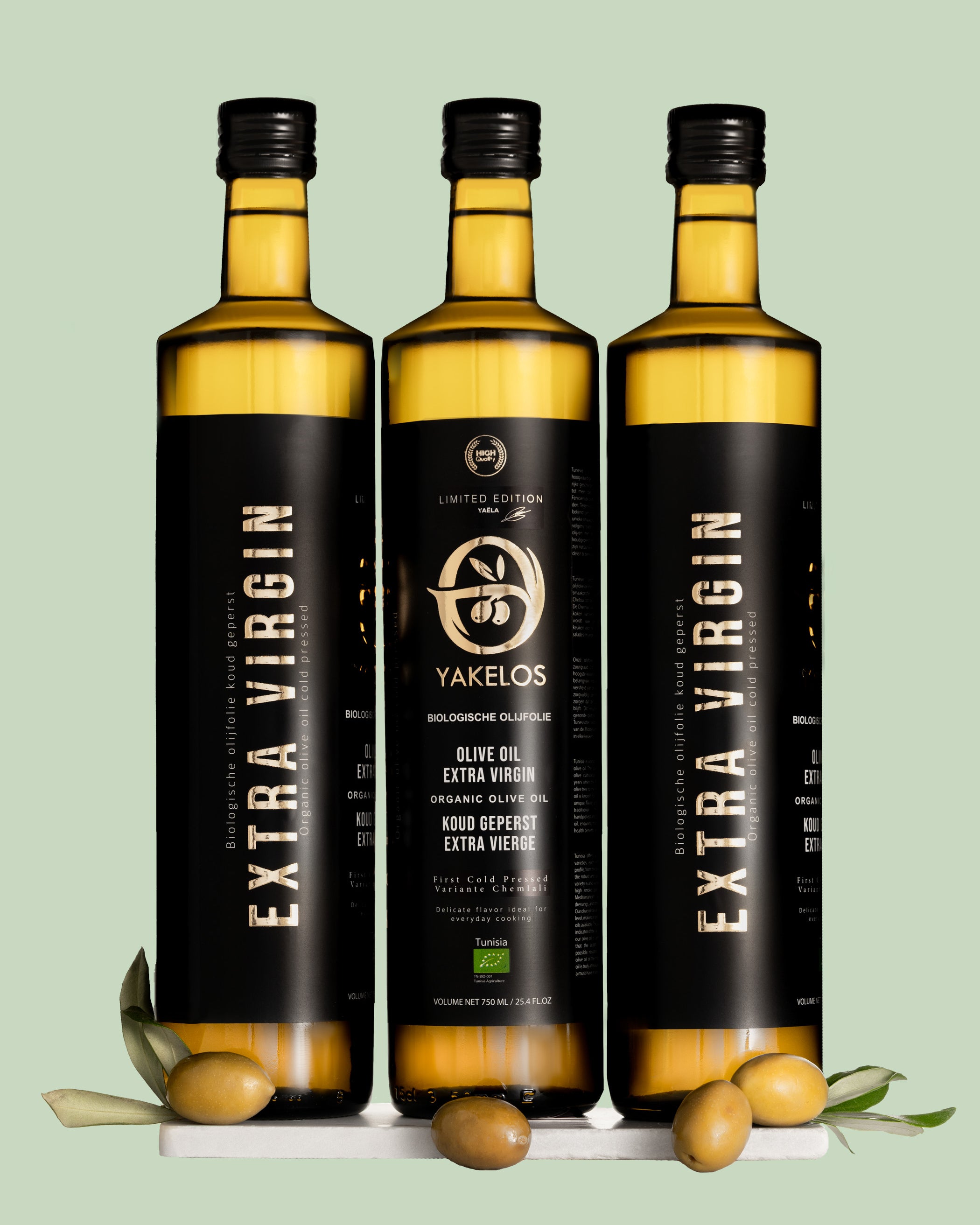
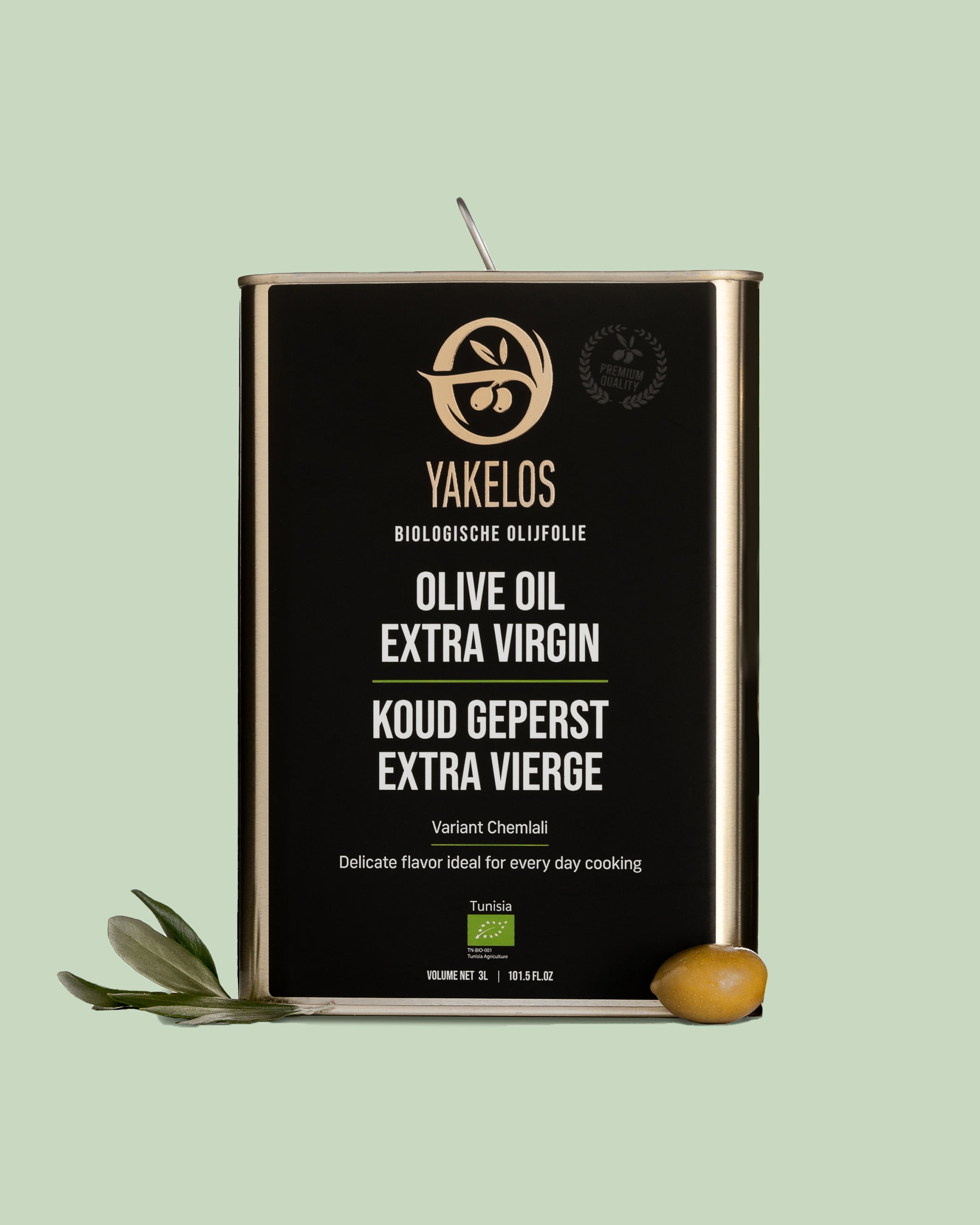
Harvest date matters too: oil is best within roughly eighteen months of pressing, after which flavour fades. Yakelos, pressed from the Chemlali olive variety in central Tunisia, scores between 0.2 and 0.4 percent.
Yakelos organic extra virgin olive oil specifications
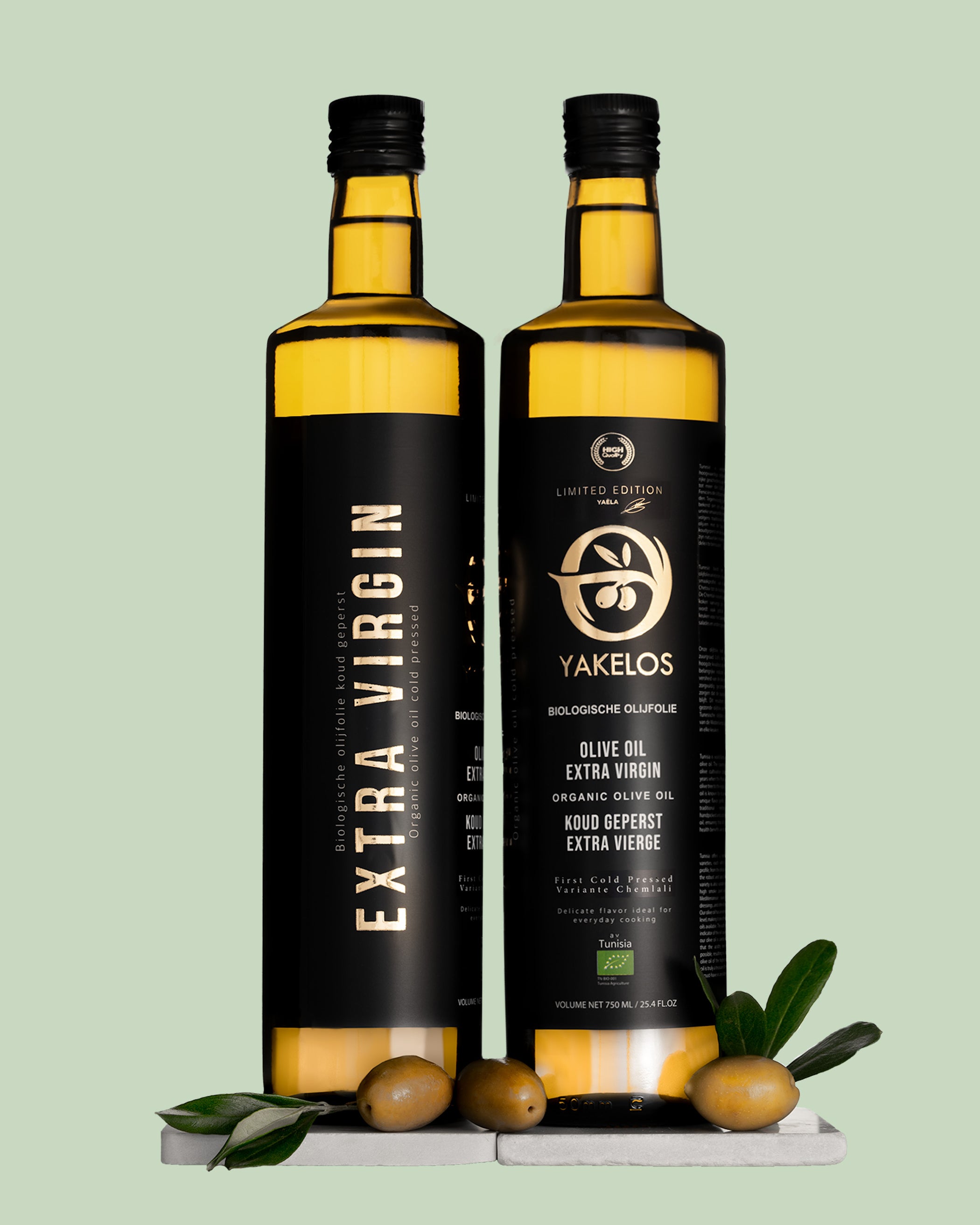
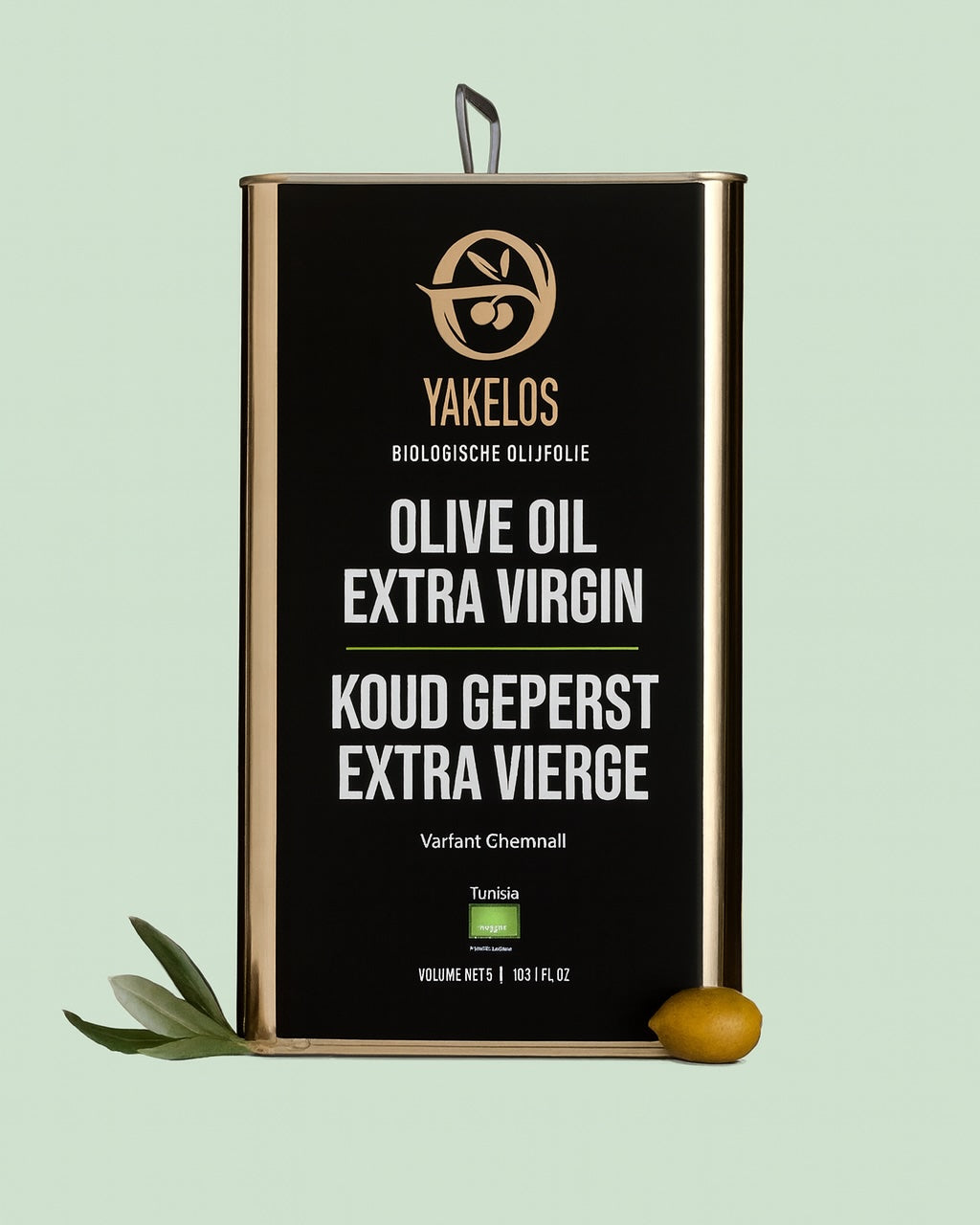
- Olive variety: Chemlali, single variety
- Origin: central Tunisia
- Acidity: 0.2 to 0.4%
- Processing: cold, below 27°C
- Certification: SKAL and EU Organic
- Shelf life: up to 2 years
Certification and what it is worth
A label is a promise, not proof you can taste. EU organic or SKAL certification means an independent body checked the olives and processing against set rules.
That matters because olive oil fraud is real: bottles labelled extra virgin sometimes get cut with cheaper refined oil. A certification cannot catch every case, but it adds a check an uncertified bottle lacks.
Treat it as a floor, not a guarantee of flavour or freshness.
Ready to check a bottle for yourself?
Yakelos oil carries EU Organic and SKAL certification, with acidity around 0.2 to 0.4 percent. Start with a tasting pack, or browse the organic extra virgin olive oil in the shop.
Why good olive oil costs more
Why does good olive oil cost three times the supermarket own brand? Mostly timing and method, not marketing.
Early harvest olives, picked underripe, give less oil but a sharper flavour. Cold processing within hours protects the oil's natural compounds. Producers still call this first press, from when olives were pressed more than once.
Weigh price against what is in the bottle: a single variety, early picking and cold processing cost more. The 30 day free trial lowers the risk of finding out if that difference matters to you.
Tip from Yakelos: buy a size you will finish within a few months of opening, then store it cool and dark. Flavour fades once a bottle stands open near the hob, catching heat and light. A smaller bottle, used quickly, keeps its taste fresher than one left half full.
Good olive oil in short
Good olive oil rarely needs a well known name to prove itself. Low acidity, a named origin, a recent harvest and a checkable certification all point the same way.
Smell and taste finish the job: fresh, mildly bitter, with a peppery catch. None of it needs expert training, just a label you take time to read.
Frequently asked questions about good olive oil
Which olive oil is the best to buy?
There is no single best brand. The best bottle is a genuine extra virgin with low acidity, a recent harvest and a named origin, judged on its specifications.
How can I tell if olive oil is real extra virgin?
Look for a fresh, grassy smell rather than anything musty. Taste should show mild bitterness and a peppery catch, with acidity below 0.8 percent and a clear origin on the label.
Is a bitter or peppery taste a sign of good olive oil?
Usually yes: mild bitterness and a peppery finish signal fresh olives and polyphenols, natural antioxidants in the oil. Intensity alone does not decide quality though.
Does good olive oil need to come in a dark bottle?
Dark glass or tin is a sensible sign, since it blocks light that would otherwise degrade the oil. It is not a guarantee of quality, but it helps preserve flavour.
How long does a good olive oil keep?
Olive oil is generally best within around eighteen months of harvest. Once opened, use it within a few months and store it cool and dark.
More questions? The olive oil FAQs page covers storage, cooking and ordering.