
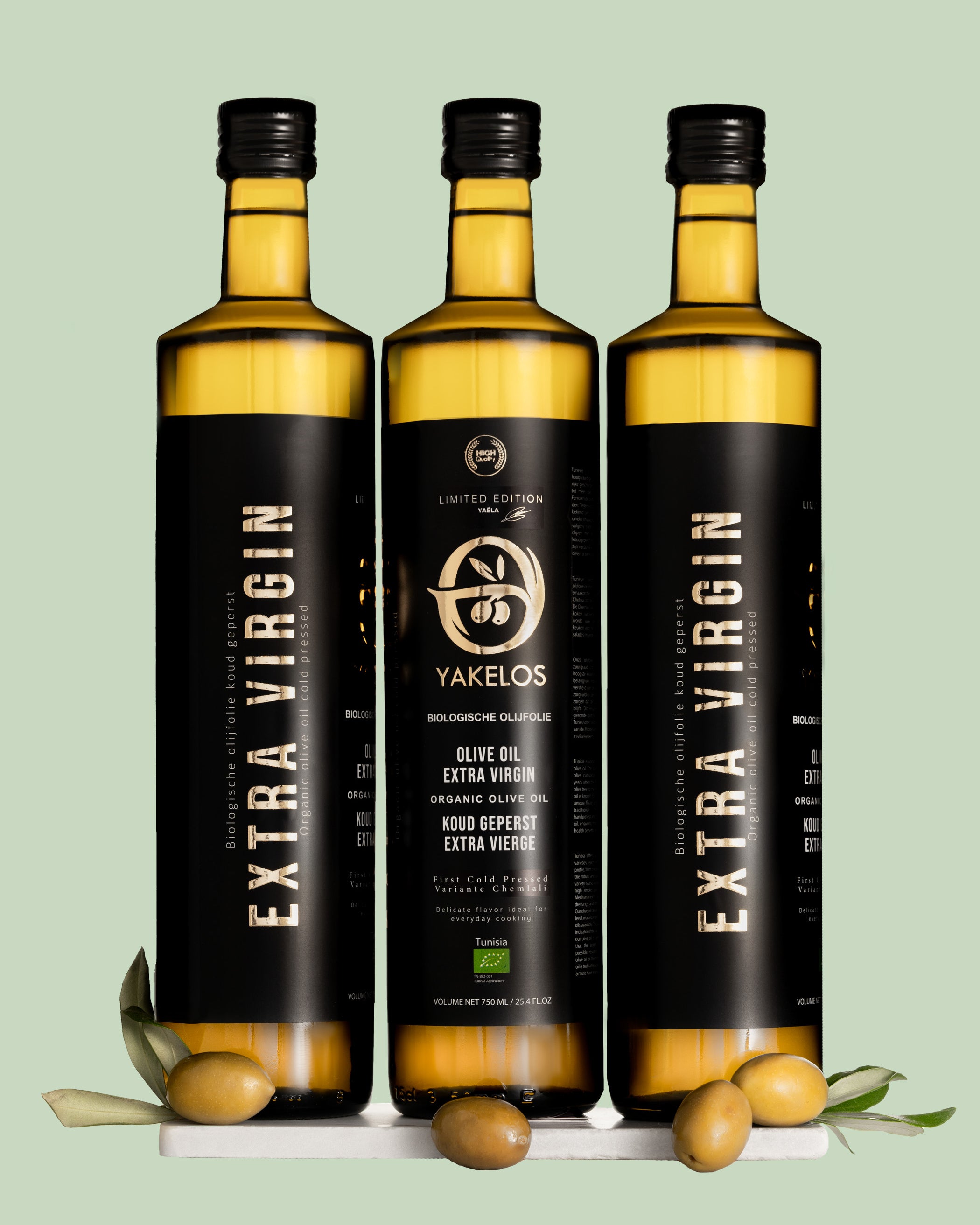


Extra virgin olive oil is olive oil of the highest quality category. The oil is obtained directly from olives using mechanical methods only, without refining or chemical treatment. It must also meet strict chemical and sensory requirements. For example, its acidity may not exceed 0.8%, and no defects may be detected during an official sensory assessment.
What is extra virgin olive oil?
Olive oil is made by crushing olives and separating the oil from the pulp, water and stone residue. With extra virgin olive oil, this is done exclusively through mechanical processes. The oil is not refined, and no solvents or other chemical substances are used to extract it.
To be sold as extra virgin olive oil, an oil must, among other things:
- be obtained directly from olives;
- be processed exclusively using mechanical methods;
- have an acidity of no more than 0.8%;
- have a fruity flavour or aroma;
- be free from officially recognised sensory defects.
‘Extra virgin’ is therefore not simply a marketing term, but a legally defined quality category.
What does the acidity of olive oil mean?
Acidity indicates the amount of free fatty acids present in the olive oil. These can develop when olives are damaged, are left unprocessed for too long or are not handled carefully.
A low acidity level can therefore indicate healthy olives and fast, careful processing after harvesting. However, you cannot literally taste this acidity. An olive oil with a slightly bitter or peppery flavour is therefore not automatically ‘acidic’.
Extra virgin olive oil may have a maximum acidity of 0.8%. Yakelos organic extra virgin olive oil has an acidity of approximately 0.2% to 0.4%. The Chemlali olives used to produce the oil are harvested early and processed within a few hours of harvesting.
What is the difference between extra virgin and regular olive oil?
The main difference lies in the processing method and the final quality.
Extra virgin olive oil is unrefined and therefore retains its natural aroma, flavour and a larger proportion of its naturally occurring compounds. Regular olive oil usually consists of refined olive oil to which a small amount of virgin olive oil has been added for colour and flavour.
Because of the refining process, regular olive oil often has:
- a more neutral flavour;
- less distinctive aromas;
- fewer natural antioxidants and polyphenols;
- a more consistent, but less distinctive flavour.
Extra virgin olive oil, by contrast, can taste fruity, grassy, spicy, bitter or slightly peppery. Its flavour profile varies depending on the olive variety, harvest time, region and production method.
| Characteristic | Meaning |
|---|---|
| Extra virgin | The highest official quality category for olive oil |
| Production method | Obtained directly from olives using mechanical methods only |
| Refining | Unrefined and not chemically treated |
| Maximum acidity | No more than 0.8% |
| Flavour and aroma | Must have fruity characteristics |
| Sensory quality | Must be free from defects during an official sensory assessment |
| Use | Suitable for both cold and warm preparations |
| Cooking | Can be safely heated at normal cooking temperatures |
| Storage | Store in a cool, dark place with the packaging tightly sealed |
Is cold-pressed olive oil always extra virgin?
Not automatically. ‘Cold-pressed’ or ‘cold-extracted’ mainly refers to the temperature used during the production process. During cold extraction, the temperature remains below 27°C. This helps preserve the flavour, aroma and natural compounds as effectively as possible.
However, an oil must also meet specific chemical and sensory requirements before it may officially be called extra virgin. A low processing temperature alone is therefore not sufficient.
Yakelos Organic Extra Virgin Olive Oil is cold-processed immediately after harvesting at a temperature below 27°C. The oil is then filtered, preventing sediment from remaining in the oil and helping its quality stay stable for longer.
Can you use extra virgin olive oil for cooking?
Yes, you can use extra virgin olive oil for cooking. The oil is suitable for normal everyday preparations, such as cooking vegetables, fish, meat or potatoes, as well as making sauces and oven-baked dishes.
Extra virgin olive oil mainly contains monounsaturated fatty acids. High-quality extra virgin olive oil also contains natural antioxidants, including polyphenols. This composition contributes to the oil’s stability when heated.
However, it is advisable not to heat the oil unnecessarily for prolonged periods or at extremely high temperatures. For most pan-fried dishes, a low to medium-high heat is more than sufficient. Yakelos Extra Virgin Olive Oil can be used for light heating up to approximately 170 to 180°C.
Once the oil begins to visibly smoke, the temperature is too high. Lower the heat and preferably use fresh oil.
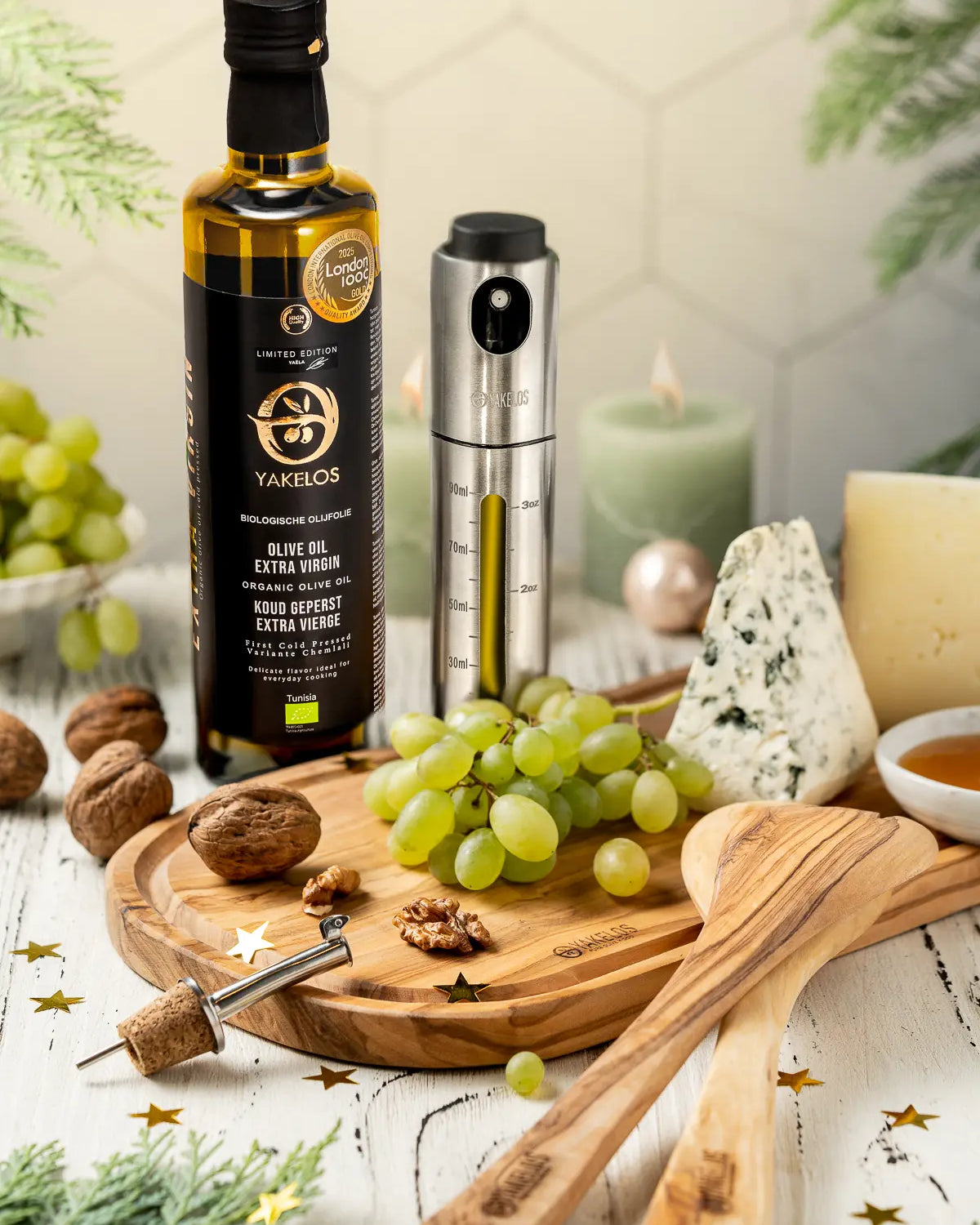
Looking for inspiration? View our recipes with olive oil for both hot and cold dishes.
Does extra virgin olive oil become toxic when heated?
It is frequently claimed online that extra virgin olive oil becomes toxic when used for cooking. This claim is too absolute and is not correct when the oil is used normally.
Every oil changes when it is heated for extended periods or at extremely high temperatures. High temperatures, oxygen and repeated use can cause fats to oxidise and unwanted breakdown products to form. This does not only apply to olive oil, but to all cooking oils and fats.
Extra virgin olive oil is sufficiently stable for everyday use at normal cooking temperatures. Furthermore, the smoke point alone does not provide a complete picture of an oil’s stability. Its fatty acid composition and antioxidant content also play an important role.
Cooking with extra virgin olive oil does not suddenly make it toxic. However, you should follow a few practical guidelines:
- do not allow the oil to smoke for prolonged periods;
- do not heat the oil unnecessarily for too long;
- do not reuse the oil repeatedly;
- keep the bottle tightly sealed;
- do not store olive oil next to a hot hob or in direct sunlight.
Heating can reduce some of the oil’s polyphenol content. Would you like to benefit as much as possible from its flavour and natural compounds? Alternate between using the oil for warm preparations and using it cold over salads, bread, pasta, soups or grilled vegetables.
What is organic extra virgin olive oil?
With organic extra virgin olive oil, the olives are cultivated in accordance with organic farming regulations. These regulations include restrictions on the use of synthetic pesticides and artificial fertilisers. The entire production chain must be inspected before the European organic certification label may be used.
Organic and extra virgin do not mean the same thing:
- Organic refers to the way in which the olives are cultivated and processed.
- Extra virgin refers to the quality category of the final olive oil.
An organic olive oil is therefore not necessarily extra virgin. Conversely, an extra virgin olive oil does not have to be organic. An olive oil carrying both labels meets both the organic production regulations and the quality requirements for extra virgin olive oil.
Yakelos is made from 100% organically grown Chemlali olives from Central Tunisia and is certified organic by SKAL and the EU, among others.
How can you recognise the best extra virgin olive oil?
The best extra virgin olive oil partly depends on your personal taste and the dish for which you intend to use it. Nevertheless, there are several characteristics you can look for.
1. A clearly stated origin
Good packaging states where the olives come from and where the oil was produced. A Mediterranean-looking label alone tells you very little about the oil’s actual origin.
2. Information about the harvest
Olive oil is a fresh product. Information about the harvest year, bottling date and best-before date can help you assess its freshness more accurately.
3. A low acidity level
The legally permitted acidity level for extra virgin olive oil is no more than 0.8%. An even lower measured acidity may indicate careful harvesting and fast processing, although it is never the only quality criterion.
4. Protection from light
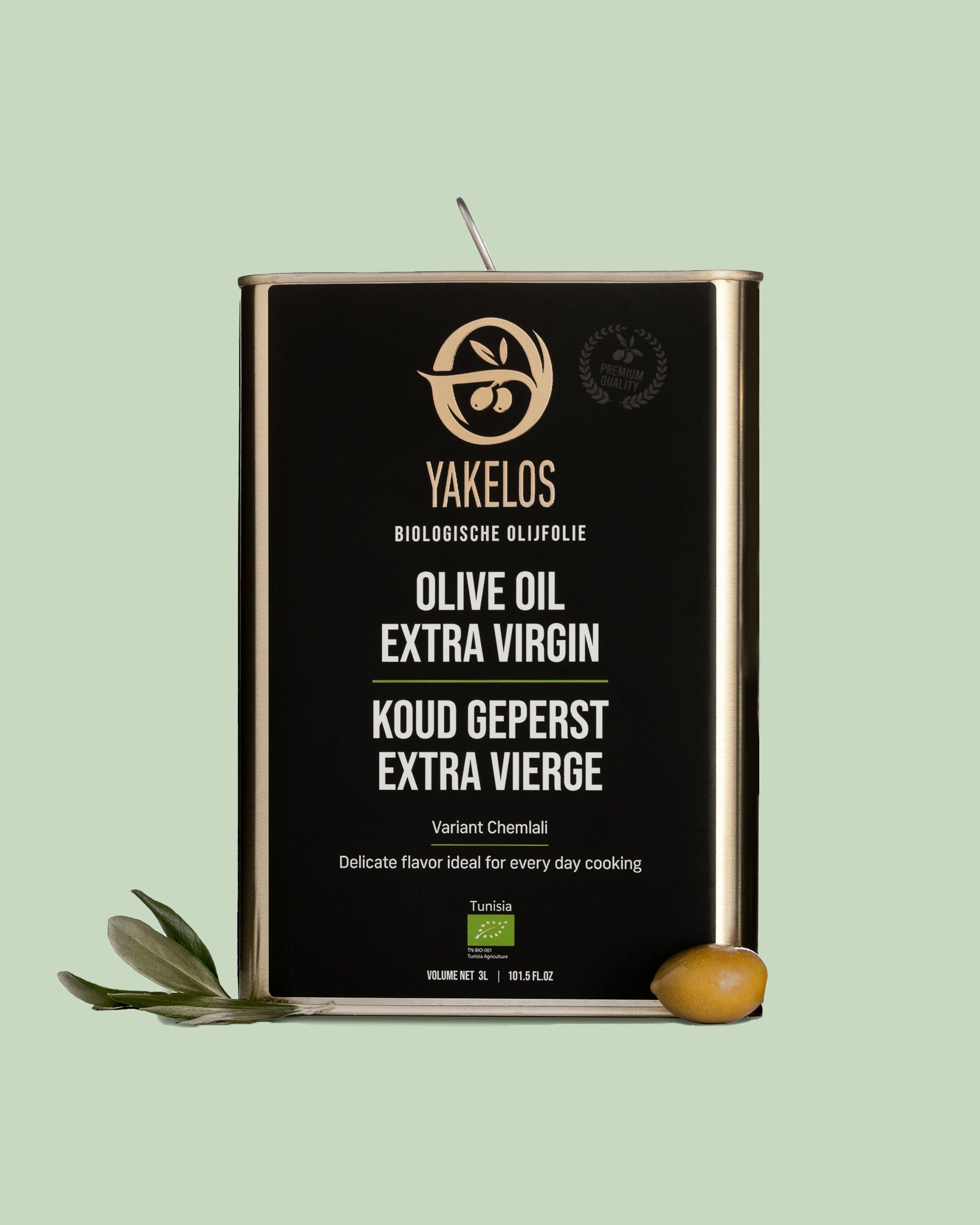
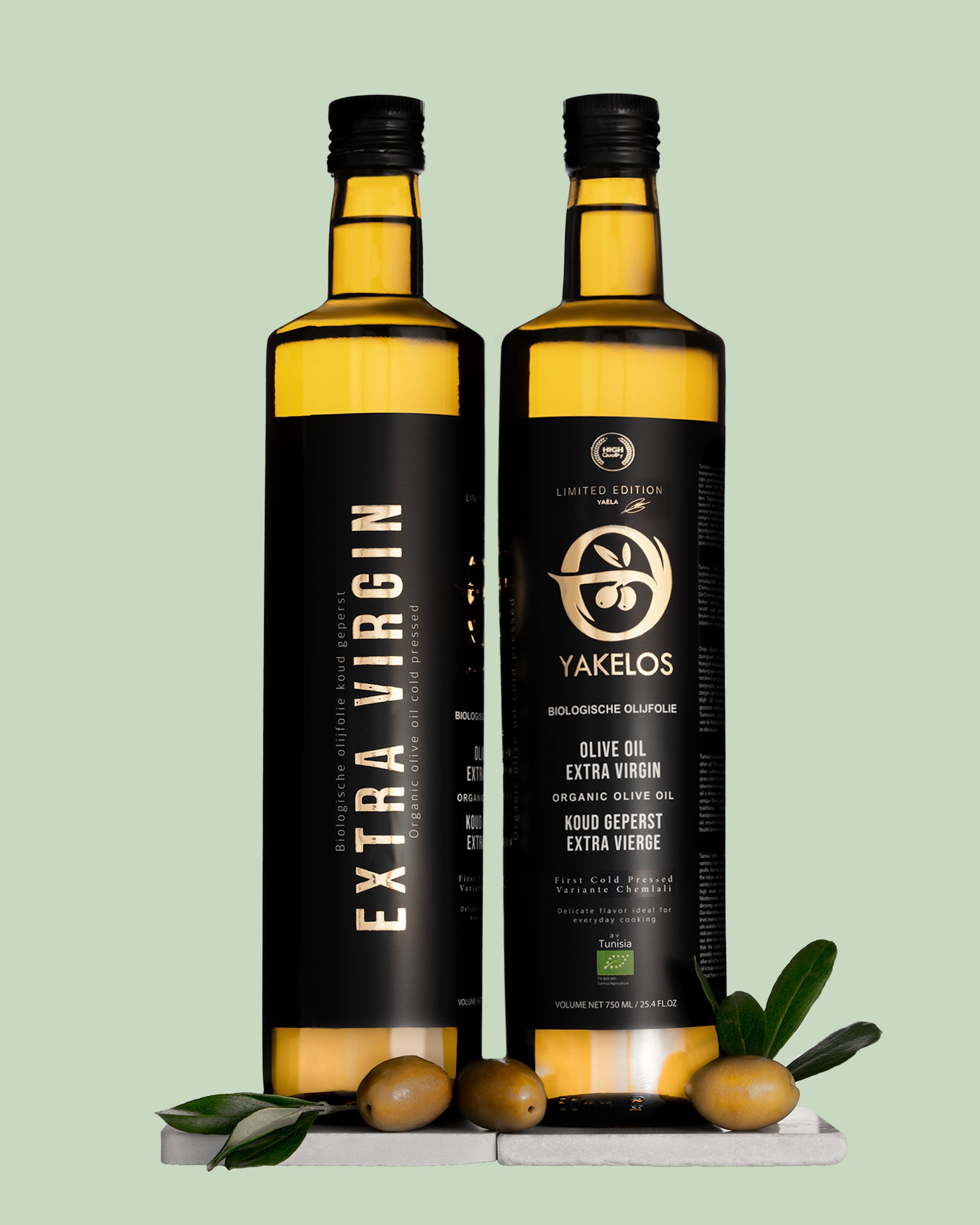
Light, heat and oxygen accelerate the deterioration of olive oil. You should therefore preferably choose a dark glass bottle or an opaque tin.
5. A recognisable aroma and flavour
Good extra virgin olive oil smells and tastes fresh. Depending on the olive variety, you may recognise aromas of grass, herbs, fruit, almonds or green leaves. A slight bitterness and a peppery sensation at the back of the throat are often natural characteristics of fresh olive oil and the polyphenols it contains.
6. Transparency about the production process
Producers who provide information about the olive variety, harvest, processing, filtering and certifications make it easier to assess the quality of their oil.
The flavour of Yakelos Extra Virgin Olive Oil
Yakelos Organic Extra Virgin Olive Oil is made from a single olive variety: the Chemlali olive from Central Tunisia. This olive variety gives the oil an accessible and mild flavour profile.
Its aromas and flavours include:
- almond;
- fresh grass;
- mild herbs;
- a mildly fruity flavour;
- a subtle peppery finish;
- light, elegant bitter notes.
This makes the oil suitable for everyday use. You can use it in dressings and dips, as well as in pasta, soups, vegetables, fish and warm Mediterranean dishes.
The olives for the current harvest were picked in November and December 2025 and cold-processed immediately. The oil contains no additives, blends or refined oil.
How should you store extra virgin olive oil?
Even the best extra virgin olive oil will lose quality if it is stored incorrectly. The main enemies of olive oil are light, heat and oxygen.
You should therefore store olive oil:
- in a cool place at approximately 15 to 20°C;
- in a dark cupboard;
- away from the oven or hob;
- with the packaging tightly sealed;
- preferably in dark glass or an opaque tin.
Are you transferring the oil into a refillable bottle? Make sure the bottle is completely clean and dry. Any remaining water or old oil residue can negatively affect the shelf life and flavour.
Extra virgin represents verifiable quality
Extra virgin olive oil is the highest official quality category for olive oil. The oil is obtained exclusively through mechanical methods, is unrefined, has a maximum acidity of 0.8% and must be free from sensory defects.
High-quality extra virgin olive oil can be used both cold and warm. Cooking with extra virgin olive oil is not toxic at normal temperatures. The most important thing is to prevent the oil from smoking for prolonged periods or being reheated repeatedly.
Yakelos combines the requirements for extra virgin olive oil with organically grown Chemlali olives, cold processing, low acidity and a mild, fruity flavour. This gives you one olive oil for salads, dressings and dips, as well as for your everyday warm dishes.
Frequently asked questions about extra virgin olive oil
What does extra virgin mean for olive oil?
Extra virgin means that the olive oil has been obtained exclusively from olives using mechanical methods, has not been refined and meets the highest official quality requirements. Its acidity may not exceed 0.8%, and the oil may not have any flavour defects during a sensory assessment.
Is extra virgin olive oil the same as cold-pressed olive oil?
No. Cold-pressed or cold-extracted means that the temperature remains below 27°C during the production process. To be classified as extra virgin, the olive oil must also meet various chemical and sensory requirements.
Can you heat extra virgin olive oil?
Yes. Extra virgin olive oil can be used for frying, roasting and other everyday warm preparations. Make sure the oil does not smoke for prolonged periods and avoid unnecessarily high temperatures.
Is cooking with extra virgin olive oil toxic?
No, not when used normally. Like other oils, olive oil can break down when exposed to extreme, prolonged or repeated heating. At normal cooking temperatures, high-quality extra virgin olive oil is suitable for everyday use.
What is the difference between organic and extra virgin olive oil?
Organic refers to the cultivation and controlled production method. Extra virgin refers to the quality and processing of the oil. Olive oil can be organic, extra virgin or both organic and extra virgin.
How long can you store extra virgin olive oil?
The exact shelf life is stated on the packaging. When stored correctly, Yakelos Extra Virgin Olive Oil can be kept for up to two years after bottling. After opening, it is important to seal the packaging properly and store it in a cool, dark place.



Comments
Hoi, wat is het polyfenolen gehalte van jullie olijfolie??