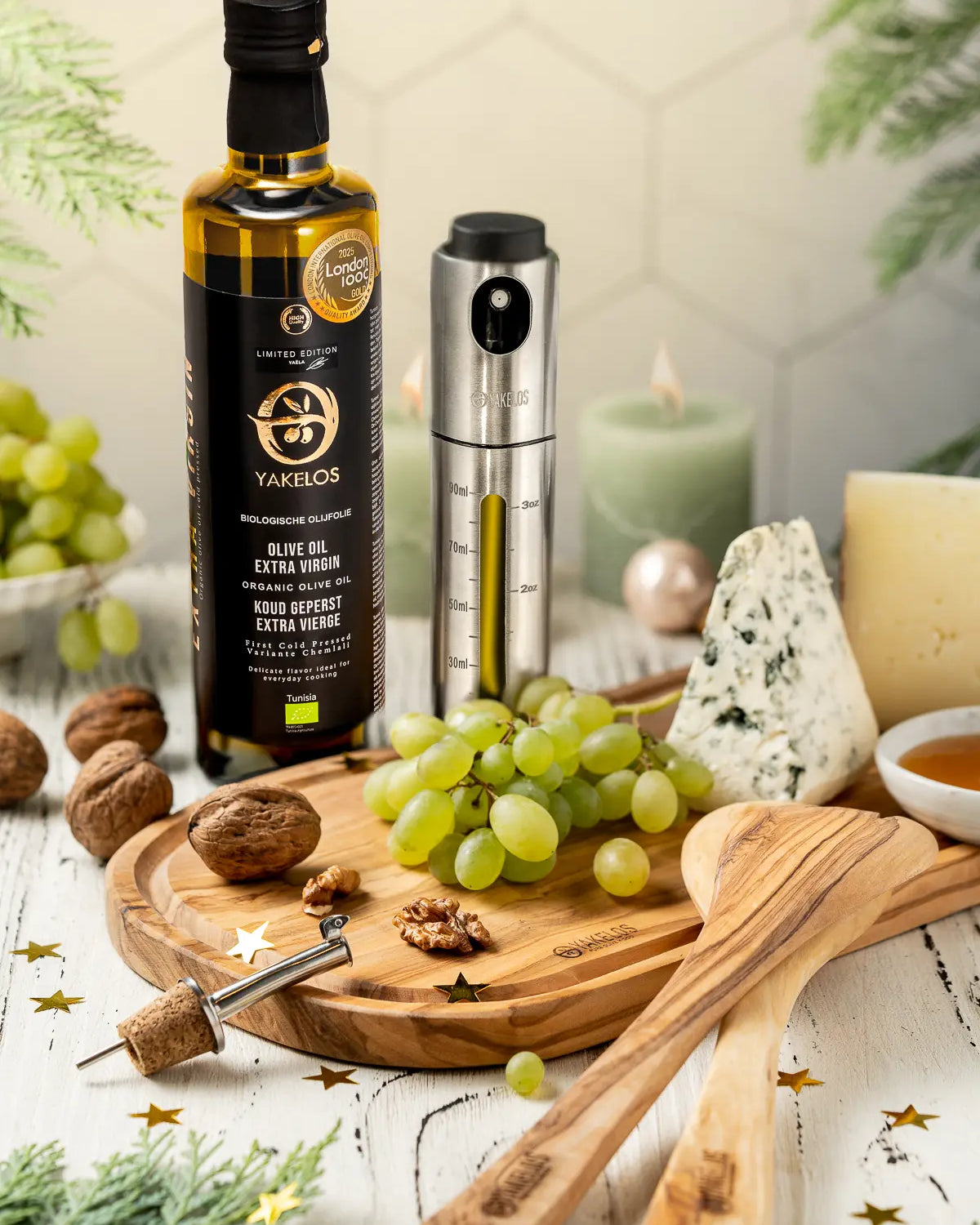


Not every bottle labelled extra virgin is genuine extra virgin olive oil. Recognising good olive oil starts with the label and ends on your tongue, and most of it you can check yourself, in the shop or at home. This article covers four checks: packaging, acidity, smell and taste, each with a number you can verify.
In short:
- 0.2 to 0.4% real acidity of a fresh extra virgin, well under the 0.8% legal ceiling
- below 27°C cold processing temperature that protects flavour and polyphenols
- 12 to 18 months window in which olive oil is at its best after harvest
What the label and packaging really tell you
Picture a shelf holding twenty bottles that all say extra virgin. How do you choose? Start with the packaging itself.
- The words "extra virgin" on the front, not just "olive oil" or "pure"
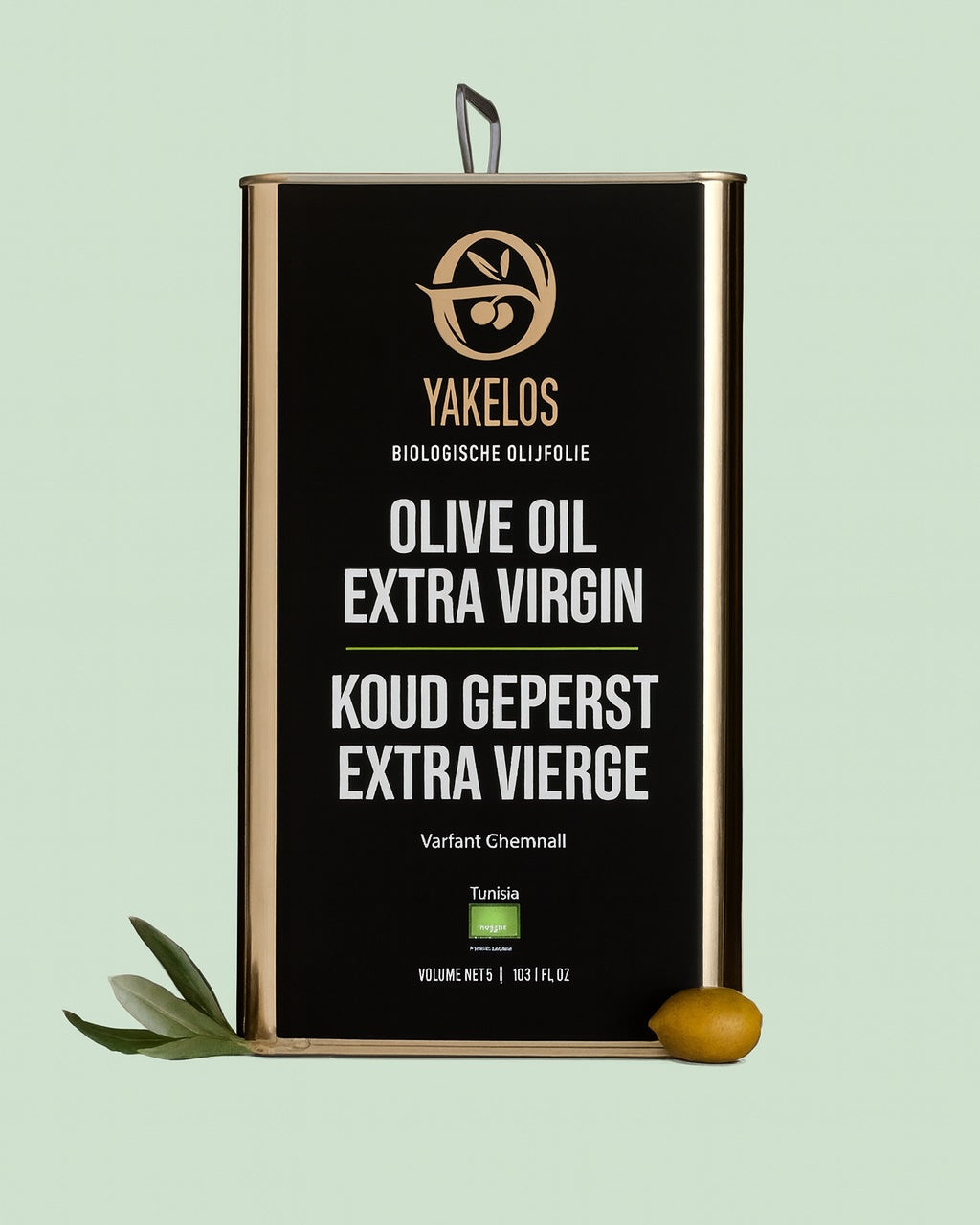
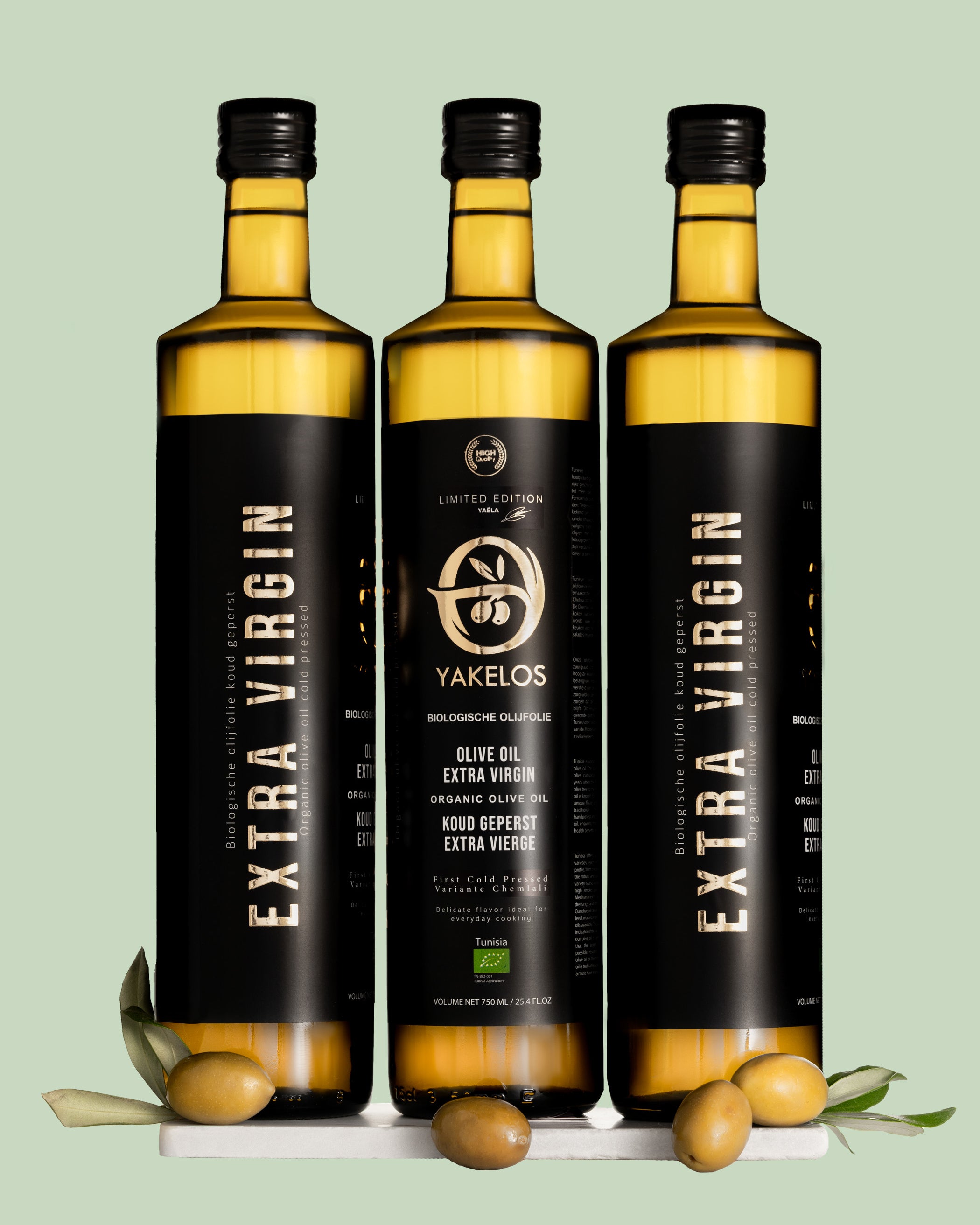
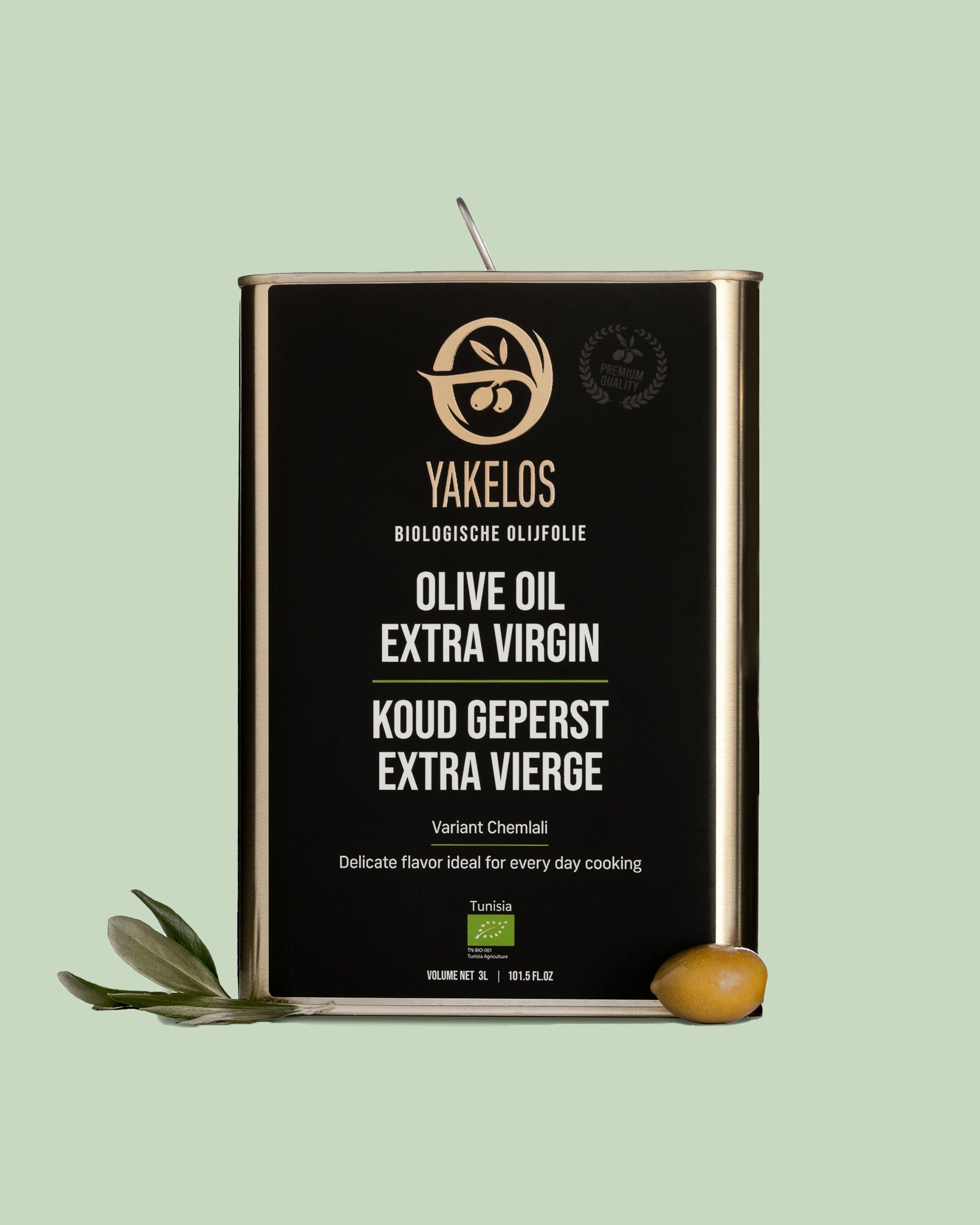
- Dark glass or tin, never clear plastic, since light breaks the oil down
- A harvest date, not only a best before date
- A named origin and a single olive variety, rather than a generic EU blend
A harvest date tells you something a best before date hides: how fresh the oil actually is. Olive oil is at its best for 12 to 18 months after harvest, then it fades. A single named variety, such as Chemlali, also proves the producer can trace every bottle back to a specific harvest, which matters given how common olive oil fraud still is.
What acidity and extra virgin actually mean
What actually is extra virgin? It is the top grade of olive oil, cold processed from olives only, with no chemicals and no blending with refined oil. You can read the full definition in our piece on what extra virgin olive oil means.
The law sets a ceiling on acidity, a measure of free fatty acids that rises as olives age or the oil oxidises, at 0.8 percent for extra virgin. A fresh, carefully made oil sits far below that, typically 0.2 to 0.4 percent, the range Yakelos measures in its Chemlali oil.
A low acidity alone does not guarantee good taste or real freshness. It is one sign among several, useful alongside a recent harvest date and a proper smell and taste check.
Yakelos organic extra virgin olive oil specifications
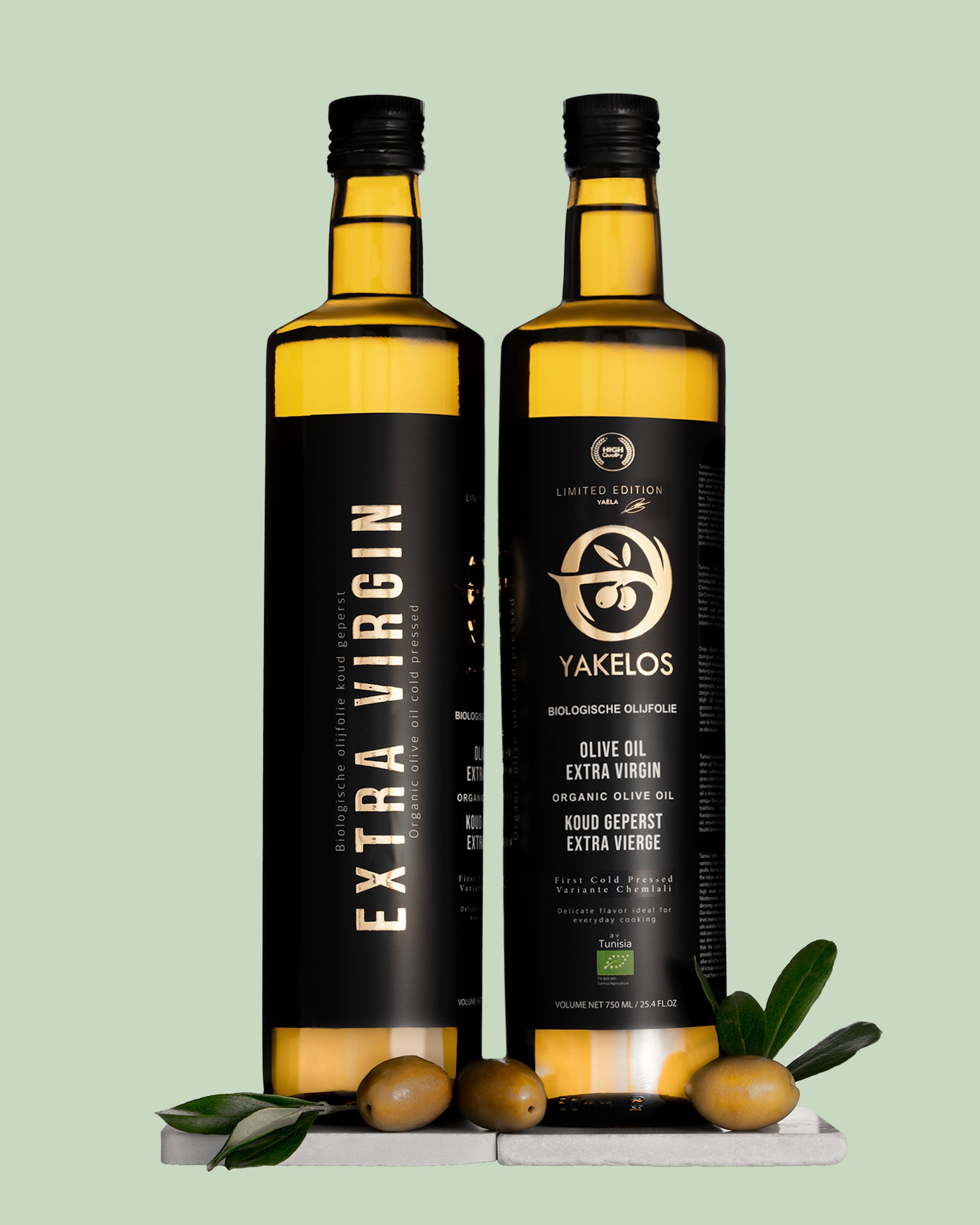
- Olive variety: Chemlali, a single variety
- Origin: central Tunisia
- Acidity: roughly 0.2 to 0.4%
- Processing: cold, below 27 degrees, within hours of harvest
- Certification: SKAL and EU Organic
- Shelf life: up to 2 years from bottling
The smell test: what a fresh oil should give you
Stand at the counter with a small glass of oil in hand. Pour a little in, cup it with your palm, swirl gently and breathe in. That is the smell test, and it takes less than a minute.
A genuine oil gives you fresh, grassy, fruity notes, sometimes a hint of almond and mild herbs, close to what an early harvest single variety like Chemlali offers. A musty, flat or metallic smell means the oil is old or has oxidised, a reaction with oxygen that breaks the fats down. If you want to practise properly, see our guide on how to taste olive oil.
Tip from Yakelos: warm the glass with your hand for a minute before you smell it. The gentle warmth releases the aromas, so grassy and herbal notes come through more clearly than from a cold glass.
The taste test: why bitter and peppery are good signs
A light bitterness on the tongue and a peppery kick at the back of the throat are not faults. They are signs of polyphenols, natural antioxidant compounds that are stronger in young, early harvest oil. Some oils even make you cough slightly, and that is fine.
Research has associated these polyphenols with antioxidant activity in the body, though a bottle of oil is not a treatment for anything. A clean, fresh mouthfeel is what you want, not a heavy, greasy or flat finish. The compound behind that peppery bite has a name of its own, covered in our piece on olive oil and oleocanthal.
Price, origin and why quality costs more
Why does a good bottle cost more than the one at the back of the supermarket shelf? Extra virgin is labour intensive to make. Olives are harvested early, then cold processed within hours to protect the oil.
That process gives a low yield per tree and a traceable origin, both of which add cost. A half litre bottle for a few euros is almost never pure, high quality oil at that price per litre. Weigh what you get against what you pay, such as the organic extra virgin olive oil Yakelos sells from a single Tunisian harvest.
Benefits of extra virgin olive oil
- Verifiable single origin and named olive variety
- Recent harvest, not just a bottling date
- Low measured acidity, well under the legal ceiling
- Organic certification and full traceability
Things to watch
- Higher price per litre than refined or blended oil
- Shorter ideal window, so buy a size you finish
- Stronger bitter and peppery taste that takes getting used to
Try before you commit
Not sure yet whether you can tell a good oil from an average one? Start small.
Ready to run the smell and taste test yourself?
A 100 ml olive oil tasting pack lets you try the checks from this article on a genuine single variety oil, before stepping up to a larger bottle. Yakelos backs every order with a 30 day trial, so if it does not convince you, you get your money back.
The essentials
Recognising good olive oil comes down to four checks you can run yourself: the label, the acidity, the smell and the taste. Look for a dark bottle, a recent harvest date, a named variety and an acidity between 0.2 and 0.4 percent. Then let your nose and tongue confirm it: fresh and grassy on the nose, lightly bitter and peppery in the mouth. None of it needs a laboratory, just a little attention before you buy.
Frequently asked questions about extra virgin olive oil
How do you recognise the best olive oil?
Check the label for the extra virgin grade, dark glass, a recent harvest date and a named origin. Then confirm with a fresh, grassy smell and a lightly bitter, peppery taste.
Which olive oil counts as genuine olive oil?
Genuine extra virgin is cold pressed from olives only, without chemicals or blending, with acidity below the 0.8 percent legal ceiling. A single named variety and a traceable origin add further confidence.
Does colour tell you anything about olive oil quality?
No. Colour depends on the olive variety and how ripe it was, and says nothing about quality. Professional tasters use coloured glasses for this reason, and judge by smell and taste instead.
What is the difference between a harvest date and a best before date?
The harvest date shows how fresh the oil is, and olive oil is at its best 12 to 18 months after harvest. A best before date alone can hide oil that has already declined.
Can you cook with good extra virgin olive oil?
Yes, for raw use and for gentle cooking up to roughly 170 to 180 degrees Celsius. Keep temperatures moderate to protect the flavour and the polyphenols.
If any of this still feels uncertain, our olive oil FAQs cover the smaller questions this article did not have room for.