

You take a spoonful of a genuine extra virgin olive oil and it catches sharply at the back of your throat. That sting often worries people who expect something smoother. Bitter olive oil is usually a quality sign, driven by natural polyphenols, though not all bitterness is welcome. This piece shows how to tell good bitter from a fault.
- 0.2 to 0.4% acidity of Yakelos oil, well under the 0.8% extra virgin limit
- below 27°C cold processing temperature that preserves polyphenols
- 55 to 59% oleic acid in the Chemlali olive
Where the bitter taste comes from
Bitterness in olive oil comes from polyphenols, natural plant compounds that also work as antioxidants. Olives carry the most polyphenols when they are picked early, while still green and not fully ripe. As olives ripen and turn purple, polyphenols drop and the oil turns milder.
The olive variety and how the oil is made both play a part. Oil pressed quickly and kept cool holds on to more polyphenols than oil pressed slowly or under heat.
One of these polyphenols, oleocanthal, is behind the sting you feel at the back of your throat. You can read more about olive oil and oleocanthal if you want the full picture.
Tip from Yakelos: taste a spoonful of oil on its own, without bread or salad. Notice whether the bitter and peppery notes fade cleanly after a few seconds. That clean fade is usually a sign of fresh, polyphenol rich oil rather than a fault.
The Chemlali olive and why Yakelos tastes the way it does
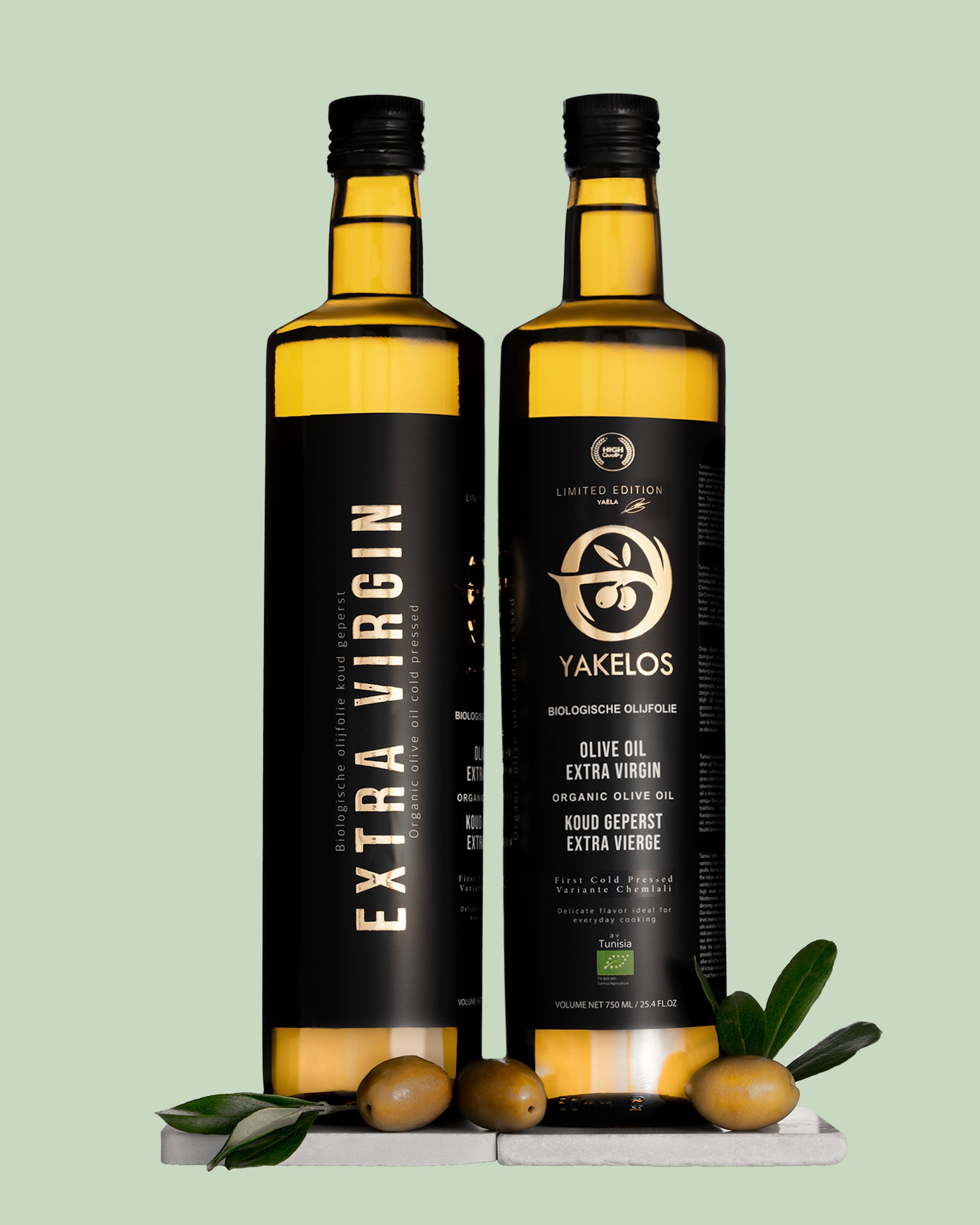
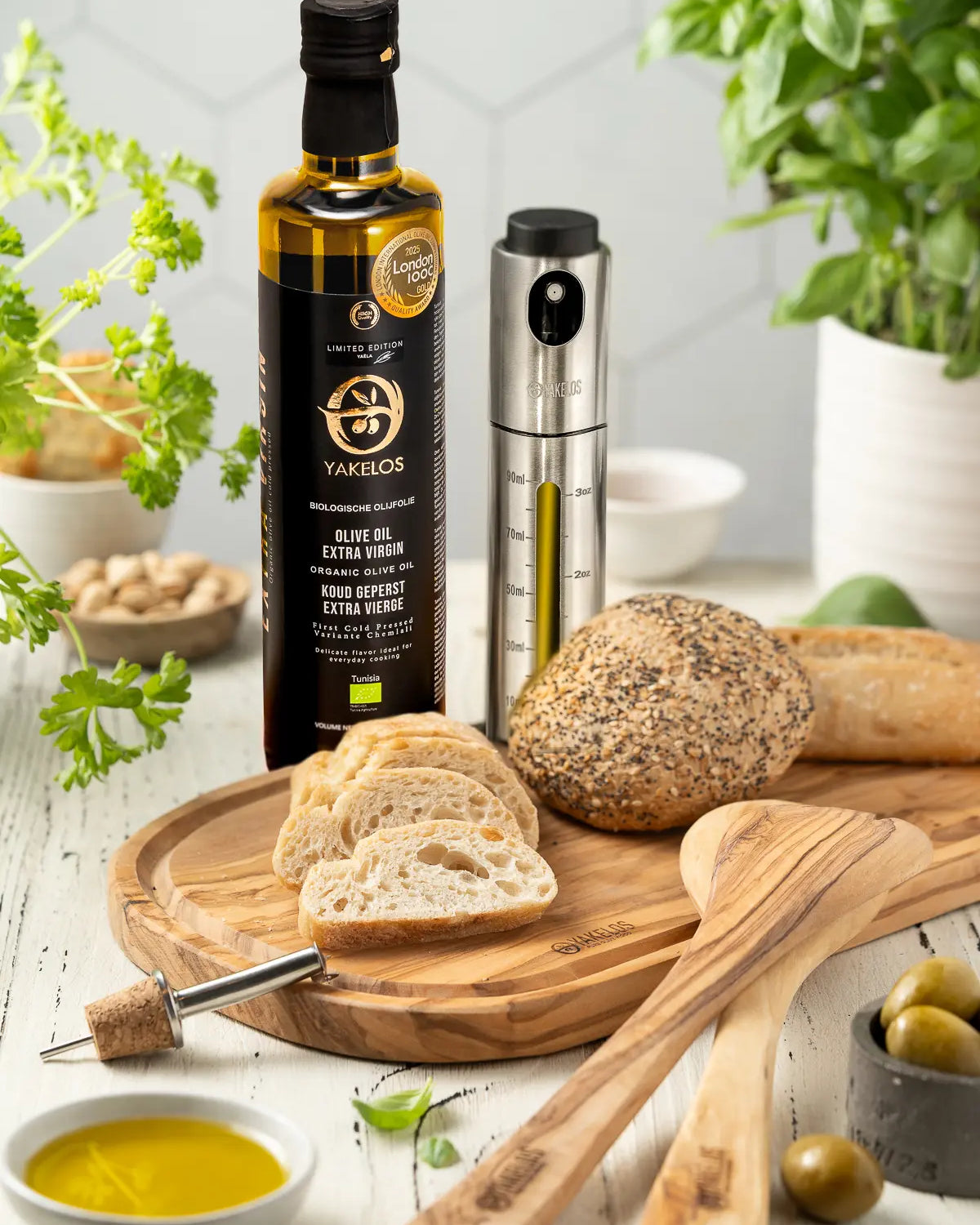
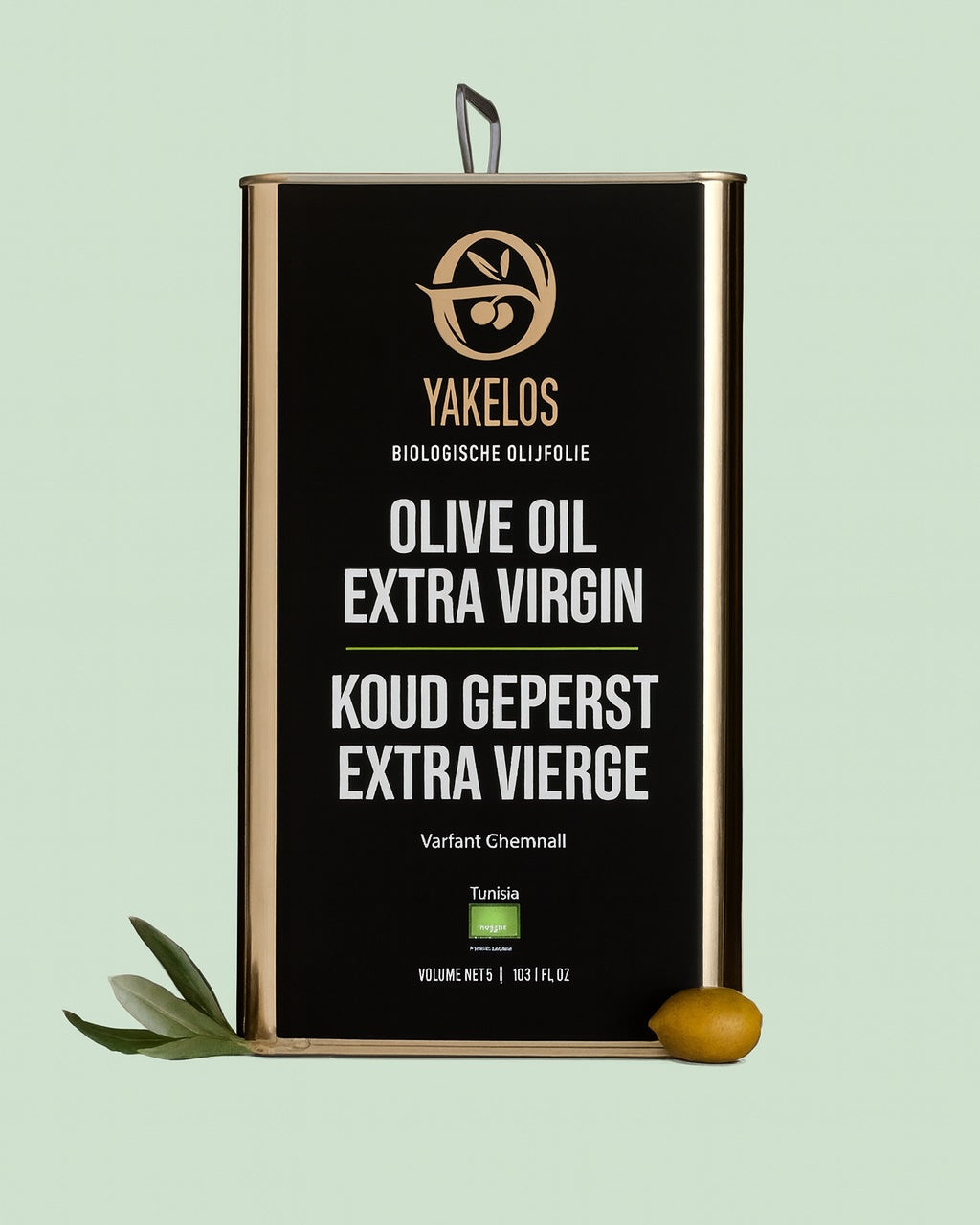
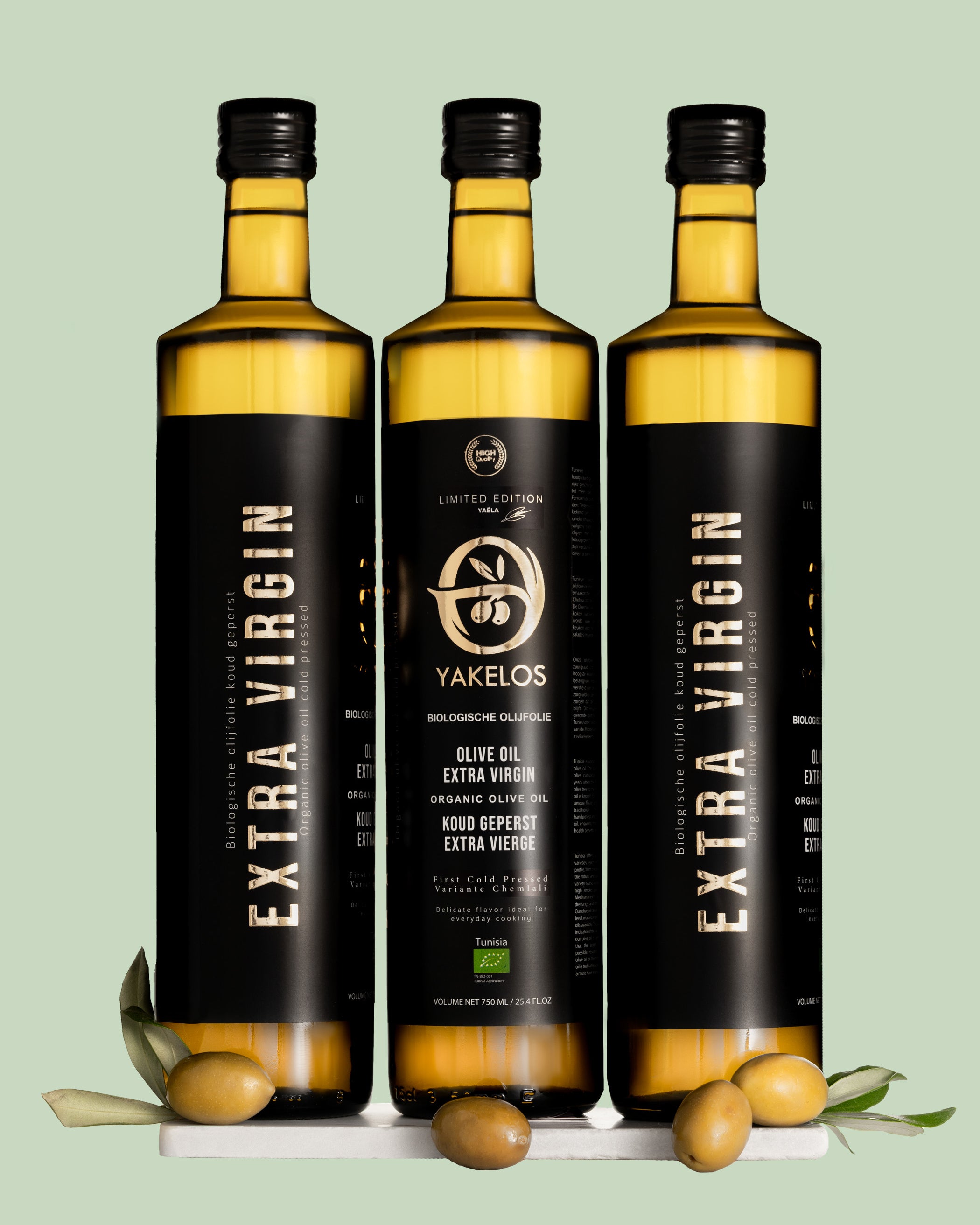
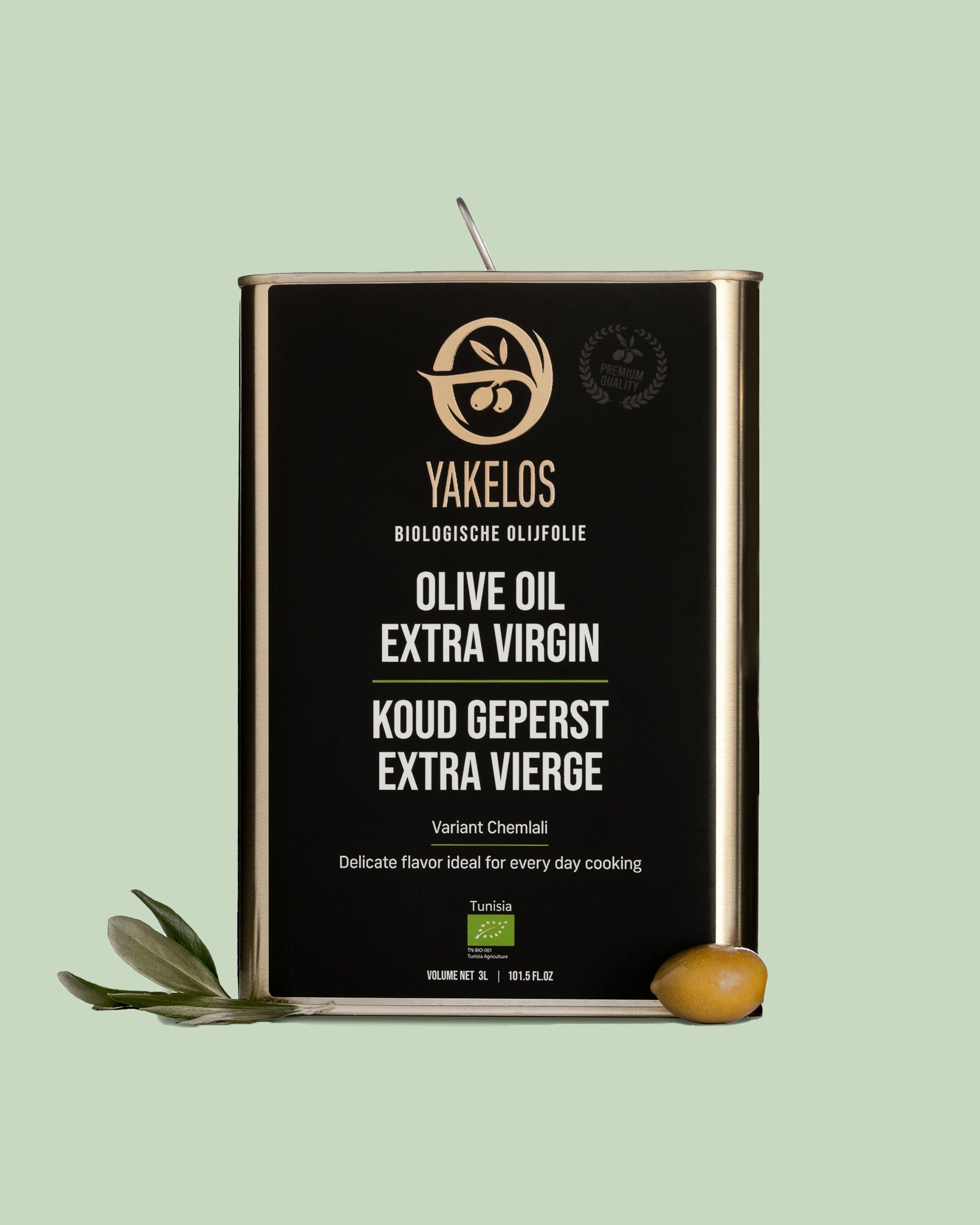
Picture a bottle of Yakelos standing next to the hob, filled with oil pressed from a single variety: the Chemlali olive. This variety grows in central Tunisia and is harvested early, then cold processed below 27 degrees within hours of picking.
That speed and low temperature protect the polyphenols that give the oil its bite.
The result is a flavour that stays balanced: almond, fresh grass, mild herbs, a gentle fruitiness and a subtle peppery finish. Bitterness is present but never harsh, because it sits alongside these other notes rather than standing alone.
Acidity in this oil sits between 0.2 and 0.4 percent, well under the 0.8 percent ceiling for extra virgin olive oil. If you want to know more about the olive itself, the Chemlali olive variety has its own remarkable resilience.
Yakelos organic extra virgin olive oil specifications
- Olive variety: Chemlali, a single variety
- Origin: central Tunisia
- Acidity: roughly 0.2 to 0.4%
- Processing: cold, below 27 degrees, within hours of harvest
- Certification: SKAL and EU Organic
- Shelf life: up to 2 years from bottling
Good bitter or rancid: how to tell the difference
How do you tell good bitterness from rancid oil that has simply gone off? The two can feel similar at first, but they come from different places entirely.
Good bitterness tastes fresh and green, like grass or a slightly under-ripe tomato. It fades cleanly a few seconds after you swallow, leaving a light peppery trace behind. A fault tastes different: musty, like old nuts, glue or metal, and it lingers flatly rather than fading.
That kind of fault comes from oxidation, a reaction with oxygen that breaks the oil down over time. Light, heat and age all speed it up, and you can read more about olive oil going off.
Signs of good bitterness
- Fresh, green aroma
- Clean peppery finish
- Balance with fruitiness
- Recent harvest
- Stored in dark glass
Signs of rancid oil
- Musty or stale smell
- Flat, lingering bitterness
- Metallic aftertaste
- Oil past its best
- Exposed to light or heat
Why olive oil stings your throat, and how to soften bitterness
Why does a good oil sting the back of your throat rather than just tasting bitter on the tongue? That sharp catch, sometimes called a throat sting, comes from oleocanthal, a polyphenol with a distinctive, almost prickly effect.
The sting is not a flaw. It signals a fresh oil rich in polyphenols, the same compounds behind its peppery finish, and research has associated them with antioxidant activity in the body.
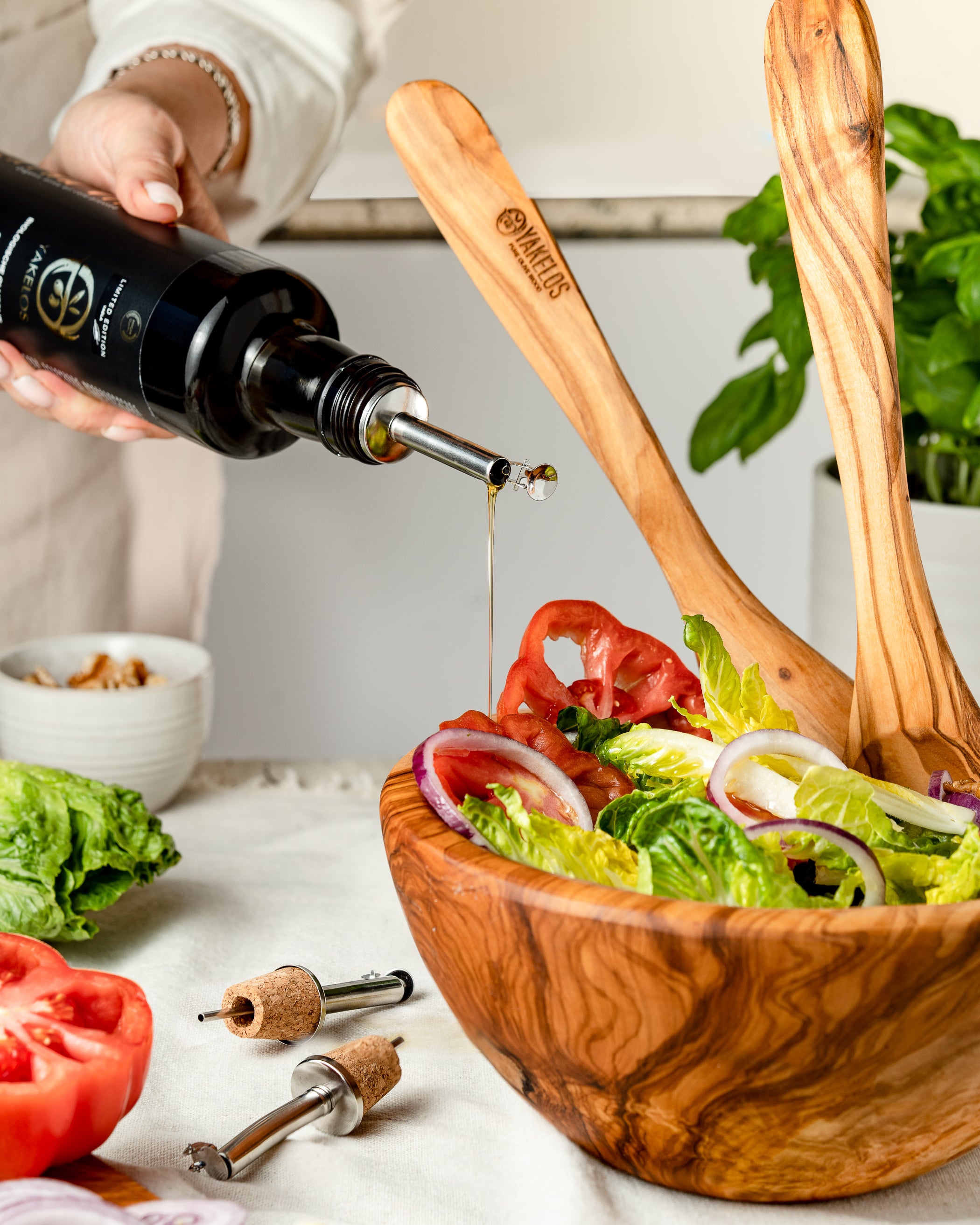
If the bitterness feels strong for a dish, pair the oil with something salty or fatty, such as cheese or a fried egg. Drizzled over warm bread, boiled potatoes or grilled vegetables, the sharper notes round out and the oil tastes milder.
Want to taste what a balanced, peppery oil is like?
Yakelos also sells a 100 ml tasting pack, ideal if you want to try the flavour before choosing a larger bottle. Have a look at the olive oil tasting box in the shop.
The short version
So is bitter olive oil good or bad? In most cases it is a sign of a fresh, polyphenol rich extra virgin oil, especially when it comes from olives harvested early and pressed quickly and cool, as with Yakelos and its Chemlali olives.
The bitterness should sit alongside fruitiness and fade cleanly, not linger flat or taste musty. A milder oil is not automatically worse, and a sharp sting at the back of your throat is usually oleocanthal doing its job rather than a fault.
Frequently asked questions about bitter olive oil
Is bitter olive oil good or bad?
Balanced bitterness usually signals a fresh extra virgin oil rich in polyphenols. A flat, musty bitterness, on the other hand, points to a fault rather than quality.
How do you know when olive oil has gone off?
Musty, rancid or metallic smells are the main warning signs, along with a stale taste that lingers rather than fading. These changes usually come from oxidation caused by age, light or heat.
Why does olive oil sting the back of my throat?
That sting comes from oleocanthal, a polyphenol found in fresh, robust extra virgin oil. It is a sign of quality rather than a defect.
How can I reduce the bitter taste of olive oil?
Pair the oil with salty or fatty foods such as cheese, or use it over bread, potatoes or grilled vegetables. The other flavours round out the bitterness rather than removing it.
Does a milder olive oil mean lower quality?
No. A mild oil can still be high quality, since balance and freshness matter more than intensity, and personal taste plays a part too.
How do I know I have genuine extra virgin olive oil?
Check that the acidity sits under 0.8 percent, that the harvest is recent, and that the label states a single origin. Certification such as EU organic is a further sign of a properly made oil.
For more common questions about buying and storing olive oil, have a look at the olive oil FAQs.