
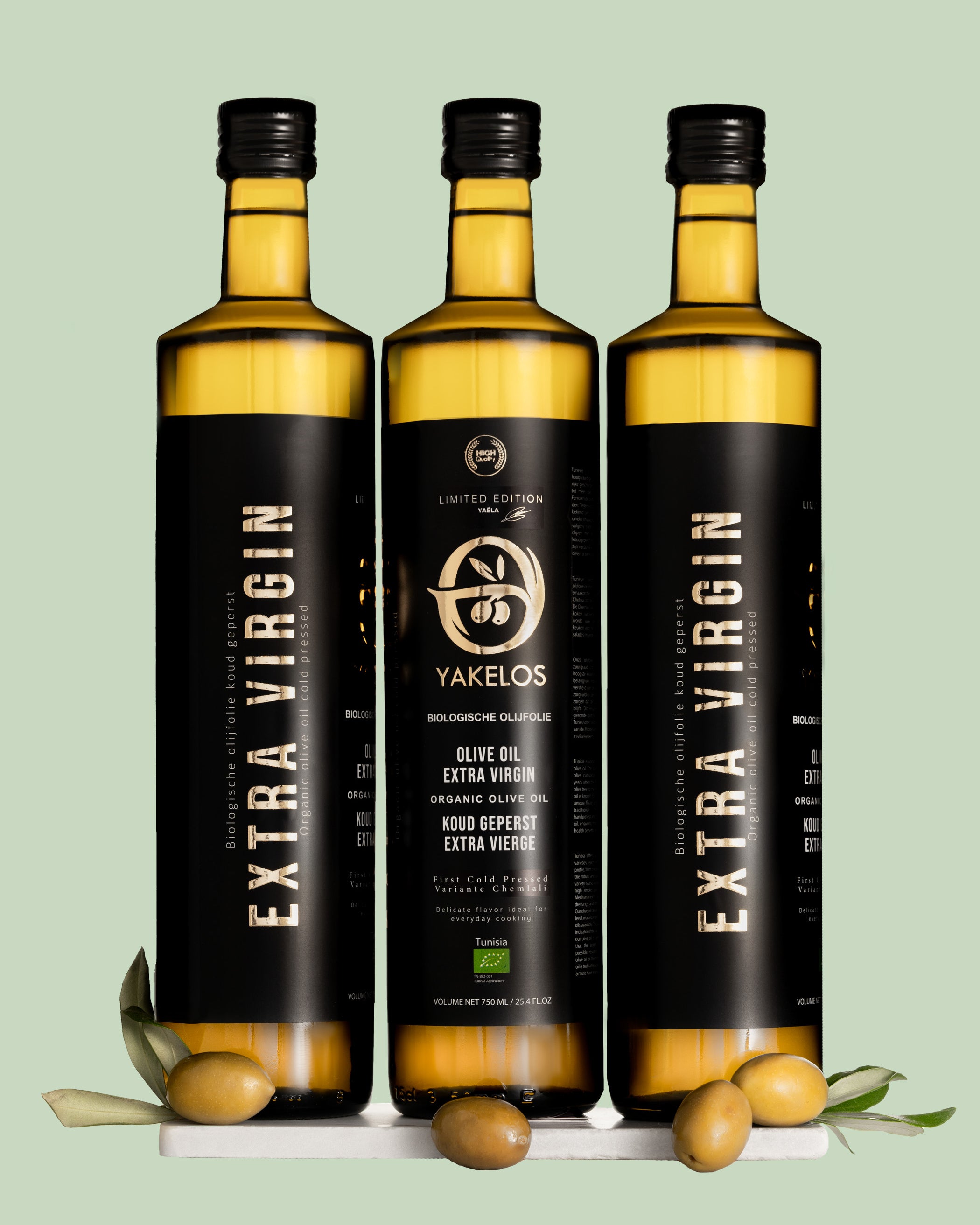
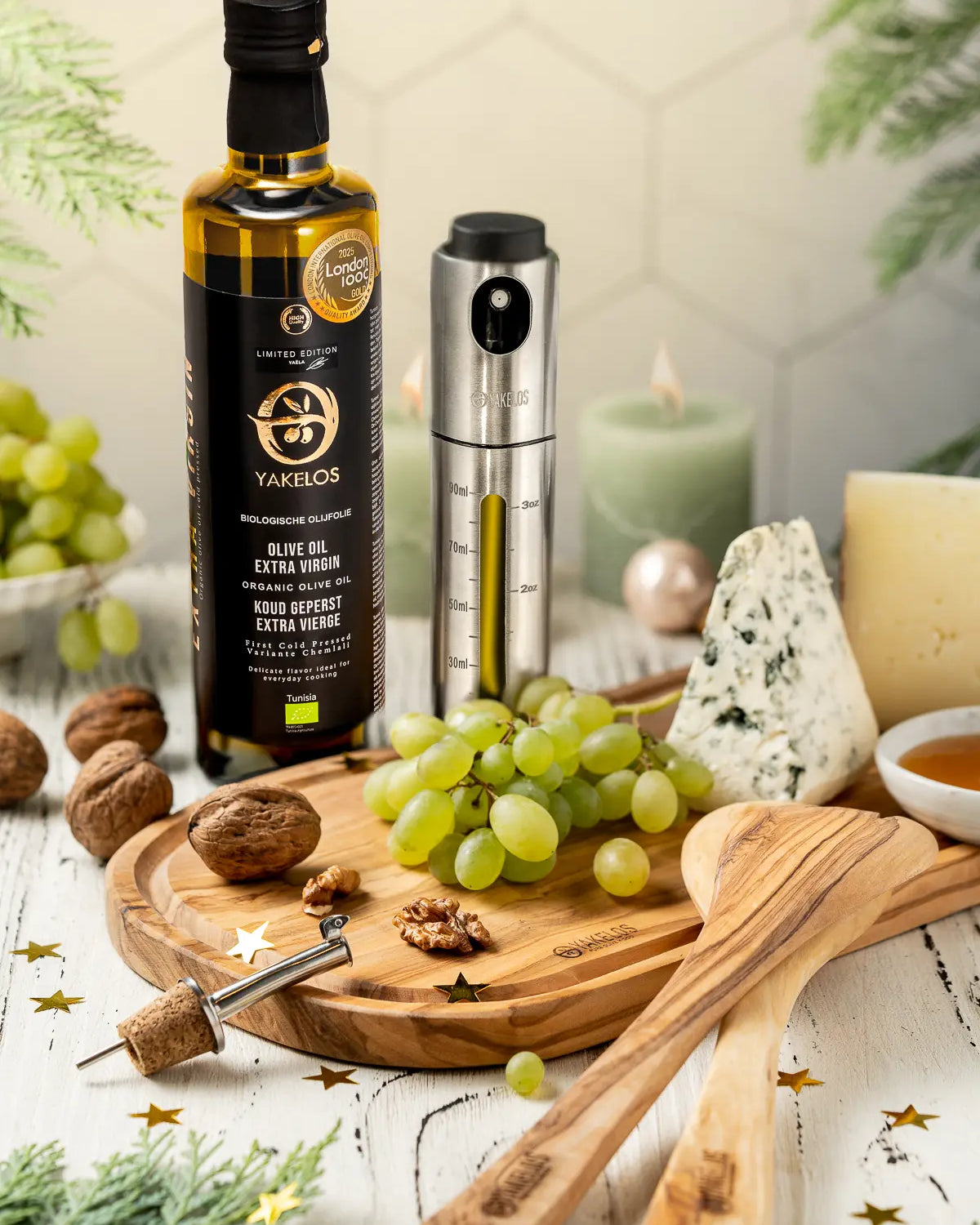


Extra virgin olive oil is pure, organic, and rich in flavour. A true liquid gold in your kitchen. Still, many people wonder: can olive oil go bad? And how can you make sure you enjoy its aroma, taste, and quality for as long as possible? We explain it clearly for you.
Discover our extra virgin olive oil
Can olive oil go bad?
Yes, olive oil can go bad. In most cases, this does not mean it becomes unsafe, but rather that it loses quality. Extra virgin olive oil is a natural product. As soon as the oil comes into contact with oxygen, light, or heat, the oxidation process begins. This process is slow but inevitable. Over time, fresh, fruity notes fade and are replaced by a flat or even rancid taste.
Factors that accelerate this process include light, air, heat, and time. That’s why how you store olive oil is just as important as its quality at the time of purchase.
Shelf life of olive oil (unopened)
Every bottle has a best-before date. This date indicates until when the producer guarantees optimal taste and quality. Unopened olive oil generally keeps well for 18 to 24 months after the production date.
High-quality extra virgin olive oil, such as Yakelos, can sometimes last even longer. This is because the oil is organically grown, cold-pressed, and has a low acidity level. All these factors contribute to natural stability and a longer shelf life.
How long does olive oil last after opening?
Once opened, air enters the bottle, which speeds up oxidation. For regular olive oil, a guideline of 6 to 12 months is often used. High-quality extra virgin olive oil, when stored properly, often remains flavourful and usable for up to 18 months.
Always close the bottle immediately after use and avoid pouring it for extended periods over a hot pan. This helps preserve its rich aroma and pure flavour for as long as possible.
How can you tell if olive oil has gone bad?
You don’t need a laboratory. Your senses tell you everything.
Smell: Do you detect cardboard, wax crayons, mustiness, or something rancid? Then the oil has passed its peak.
Taste: Sharp bitterness, sourness, or the absence of fruity notes indicates a loss of quality.
Appearance: Strong cloudiness or sediment may be a sign that the oil is deteriorating.
Tasting tip: Pour a small amount into a clean glass, warm it gently in your hand, and smell carefully.
Did you know?
Is your olive oil stored next to the stove? Then it will deteriorate faster. Heat accelerates oxidation and damages the rich aroma. A cool kitchen cupboard, away from heat, keeps your olive oil pure and flavourful for longer.
Olive oil past its best-before date – what now?
A best-before date is not a hard deadline. “Past date” does not automatically mean spoiled. Always check the smell and taste first. Does the oil still smell and taste fresh and pleasant? Then you can safely continue using it, for example in cold dishes or light cooking.
Best storage methods
Want to get the most out of your olive oil? These tips will help:
- Store the bottle in a dark, cool place
- Close the cap tightly after each use
- Avoid direct sunlight
- If you don’t use olive oil daily, choose a smaller bottle or a fresh subscription
Frequently asked questions
Can olive oil grow mould?
Pure olive oil itself does not grow mould. However, food residues around the bottle neck can cause mould. Keep the opening clean for optimal hygiene and flavour.
Is storing olive oil in the fridge bad?
No. Olive oil can solidify in the refrigerator, which is completely natural. Once the oil returns to room temperature, it becomes clear again without any loss of quality.
Try olive oil free for 30 days
At Yakelos, we believe in transparency, flavour, and quality. That’s why you can try our organic extra virgin olive oil risk-free for 30 days.



Comments
Maar die schenk doppen die jullie er voor leveren sluiten ook niet goed af.